Styles
Reserve vermouth
Time in barrel, complexity and price: what makes a reserve vermouth different and when it is worth choosing it over a non-aged vermouth.
What is reserve vermouth
A reserve vermouth is aged for a significant period in barrel before release. This time in wood—generally six months to several years—transforms its profile:
On Vermutpedia, reserve vermouths are identified with `reserva: true`, and we record the declared months of ageing in `agingMonths`.
- Aromatic complexity — vanilla, toast and dried-fruit notes.
- Structure — fuller body and denser texture.
- Integration — the botanicals meld more closely with the base wine.
- Evolution — the vermouth changes in the glass and gains nuance as it opens.
Differences between reserve categories
| Category | Approximate time | Characteristics | Examples |
|---|---|---|---|
| Unaged | 0 months | Fresh, direct herbs and pure botanical notes | Martini Rosso, Yzaguirre Clásico |
| Reserve | 6–12 months | Light toast, vanilla and integrated botanicals | Yzaguirre Reserva, Lustau Rojo |
| Gran reserva | 12–24 months | Oxidative notes, dried fruit and pronounced structure | Perucchi Gran Reserva |
| Special reserve | 24+ months | Extreme complexity, cellar notes and slow evolution | Falset Reserva des de 1912 (5 years) |
How to identify reserve vermouth on the label
There is no single EU-wide legal standard for “reserve” vermouth, but producers usually provide clear indicators:
On Vermutpedia, `agingMethod` records the system—Barrel, Solera or Tinaja—and `agingMonths` gives the time in months when available.
- Keywords — “Reserva”, “Gran Reserva”, “Añejo”, “Crianza” or “Barrica”.
- Declared time — “12 months in barrel” or “5 years of ageing”.
- Barrel type — American oak, French oak or century-old butts.
- Ageing system — solera or oxidative ageing.
- Designation — IGP Vermut de Reus may specify minimum periods.
Profile in the glass: reserve vs no ageing
Unaged
- Aroma — exposed botanicals, fresh herbs and direct citrus.
- Palate — light, agile and less structured.
- Finish — short and clean, with pronounced herbal bitterness.
- Best for — refreshing cocktails, quick drinking and summer aperitifs.
Reserve
Compare two bottles from the same producer: Yzaguirre Clásico Rojo, which is unaged, and Yzaguirre Reserva, aged for 12 months in barrel. They offer two distinct profiles.
- Aroma — vanilla, toast, dried fruit and integrated botanicals.
- Palate — fuller body, dense texture and oxidative notes.
- Finish — long and persistent, evolving in the glass.
- Best for — slow tasting, structured cocktails and winter drinking.
Vermouth ageing systems
Static barrel
The vermouth rests in American, French or Hungarian oak barrels for a fixed period. Barrels generally hold 225–500 litres. Oxygen enters slowly through the wood, producing gentle oxidative ageing.
Examples: Perucchi Gran Reserva and Vermut La Villa.
Solera
In this traditional Andalusian system, vermouth is moved through tiered barrels—soleras and criaderas—blending wines of different ages. The result is a consistent profile with complex ageing notes.
Examples: Lustau Rojo and Romate Vermut Jerezano.
Tinaja
Ageing in clay vessels is traditional in parts of Spain. Clay’s porosity permits micro-oxygenation unlike that of wood and contributes fewer toasted notes.
Examples: a small number of vermouths from La Mancha and Extremadura.
Read more in vermouth ageing methods.
When reserve vermouth is worth it
It is worth it if:
- You enjoy slow tasting and appreciate complexity.
- You want vermouth for structured cocktails such as a signature Negroni or Manhattan.
- You need a gift or special bottle.
- You are interested in cellar notes and evolution in the glass.
- Price is not the main consideration.
It may not be worth it if:
- You want freshness and direct herbal notes.
- The vermouth is for refreshing cocktails such as a spritz or simple Americano.
- You prioritise price and everyday drinking.
- You prefer light, agile profiles.
Price difference
Price mainly reflects time tied up in the cellar: ageing vermouth occupies space but generates no income. Evaporation—the angel’s share—also reduces the final volume.
| Category | Range (75cl) | Why |
|---|---|---|
| Unaged | €6–€12 | Fast production, no capital tied up |
| Reserve | €12–€20 | 6–12 months in barrel and opportunity cost |
| Gran reserva | €18–€30 | 12–24 months and premium barrels |
| Special reserve | €25–€50+ | 2+ years, unusual barrels and scarcity |
Standout examples in Vermutpedia
| Vermouth | Ageing | Approx. price | Profile |
|---|---|---|---|
| Falset Reserva des de 1912 | 5 years in century-old butts | ~€35 | Extreme complexity, historic-cellar notes |
| Yzaguirre Reserva | 12 months in barrel | ~€14 | Gentle toast, vanilla, balanced |
| Perucchi Gran Reserva | 18–24 months | ~€22 | Elegant, dried fruit, structured |
| Lustau Rojo | Solera | ~€16 | Jerez notes, oxidative ageing |
| Vermut La Villa | 3 months in barrel | ~€15 | Sweet, PX, strawberry tree, integrated citrus |
Reserve vs gran reserva: how long is enough?
There is no single “correct” period. It depends on the profile you want:
On Vermutpedia, you can filter by `agingMonths` to find vermouths aged for the length of time that interests you.
- 6–12 months — enough to reveal vanilla and gentle toast; a good entry point.
- 12–24 months — clear oxidative notes, dried fruit and pronounced structure; for drinkers who appreciate ageing.
- 2+ years — extreme complexity and a niche profile; for collectors and demanding tastings.
Next step
Filter by reserve characteristic, compare Yzaguirre Reserva vs Perucchi Gran Reserva or read about ageing methods.
In the catalogue
Referenced or representative bottlings for this topic.
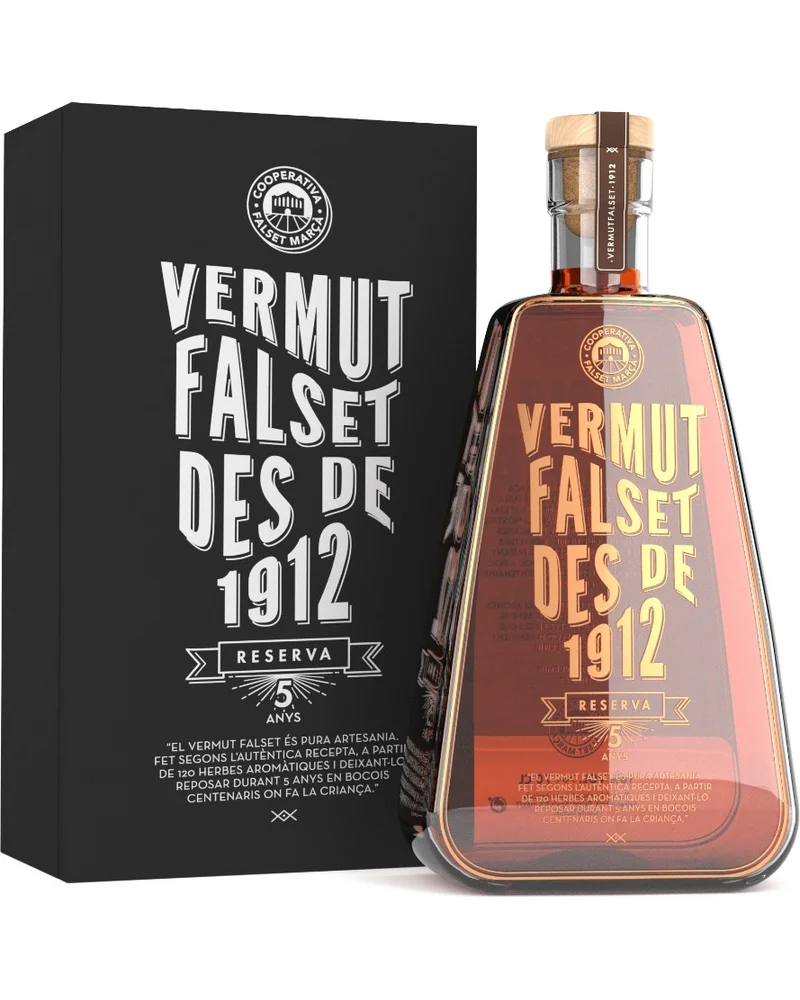
Falset
Other · Reserve · Artisan · Sweet
Falset Reserva des de 1912
Cooperativa Falset Marçà (ÈTIM)
Falset, España
- Ageing
- Barrel-aged
VP Score
El Morell
Red · Reserve · Medium-sweet
Yzaguirre Rojo Reserva
Yzaguirre
El Morell, España
- Ageing
- Barrel-aged
VP Score
Badalona
Red · Reserve · Medium-sweet
Perucchi Gran Reserva
Perucchi
Badalona, España
- Ageing
- Solera
VP Score
Frequently asked questions
What is a reserve vermouth?
A reserve vermouth has spent a minimum period of ageing in barrel (generally 6-12 months) that gives it complexity, oxidative notes and greater structure. In Vermutpedia we use the "reserve" field and "agingMonths" to identify these products.
How long should a reserve vermouth be in barrel?
There is no fixed EU regulation, but in practice: reserve is usually 6-12 months, gran reserve 12-24 months, and special expressions can exceed 5 years. Each producer defines their own criteria.
Is reserve vermouth always better?
Not necessarily. Ageing adds complexity but also changes the profile: if you seek freshness and direct herbal notes, a non-aged vermouth may be more suitable. Reserve is preferable for slow tasting and cocktails where structure matters.
Why is reserve vermouth more expensive?
The cost reflects: immobilisation time in the cellar (vermouth is not sold while ageing), loss by evaporation (angel's share), use of barrels and lower stock rotation.
Does the colour of reserve vermouth indicate quality?
No. Colour can come from caramel (E150d) in industrial vermouths or from barrel ageing in reserves. What defines reserve is ageing time, not tone. In Vermutpedia we indicate the ageing method in each profile.