Fundamentals
Artisan vs industrial vermouth
Small-scale production vs large volume: how it shows in the glass, in price and on the label the difference between artisan and industrial vermouth.
What is artisan vermouth
An artisan vermouth is distinguished by:
On Vermutpedia, we use the `artesano` field for vermouths that meet these criteria according to the producer information available. Examples include Papatán (Jaén), Vermut La Villa (Madrid) and Calla i Beu Rojo (Alicante).
- Small-scale production — limited batches and direct control over the process.
- Quality botanicals — carefully selected, often local, wild or organic.
- Long maceration — weeks or months rather than days.
- An original recipe — a distinct identity rather than a copy of a generic profile.
- Limited additives — no unnecessary artificial colours or synthetic flavourings.
- Transparency — clear origin, an identifiable winery and an explained process.
What is industrial vermouth
Industrial vermouth is characterised by:
Classic examples include Martini Rosso, Cinzano Rosso and Casa Valdepablo Vermut, a traditional Aragonese brand.
- Large-scale production — thousands of litres per batch and maximum standardisation.
- Standardised botanicals — global suppliers and consistency prioritised over singularity.
- Optimised processes — short maceration, extracts and automation.
- Competitive price — economies of scale reduce costs.
- Consistency — the same profile year after year, regardless of vintage.
- Cocktail focus — designed to work reliably in drinks such as the Negroni and Martini.
Differences in the glass
| Aspect | Artisan | Industrial |
|---|---|---|
| Aromatic complexity | High; distinct nuances and evolution in the glass | Medium; flatter profile with fewer nuances |
| Botanical intensity | Clear herbal character and identifiable spices | Generic notes and standardised bitterness |
| Body and texture | Varies by recipe; sometimes more structured | Consistent; sometimes lighter |
| Finish | Long; may show ageing or terroir notes | Short, clean and less persistent |
| Batch consistency | May vary with vintage or botanicals | No variation; identical profile |
Differences in the production process
Artisan
- Botanical selection — sometimes wild-harvested or sourced from local suppliers.
- Long maceration — three to eight weeks in alcohol or base wine.
- Manual adjustment — frequent tasting and batch-by-batch corrections.
- Limited production — hundreds or a few thousand bottles.
- Manual or semi-automatic bottling — greater hands-on care throughout the process.
Industrial
- Standardised botanicals — concentrated extracts and global suppliers.
- Short maceration or rapid distillation — days or even hours.
- Standardised formulation — a fixed recipe with no variation.
- Mass production — tens or hundreds of thousands of bottles.
- Automatic filling — high speed with batch quality control.
Price differences
Price does not guarantee quality, but for artisan vermouth it often reflects real production costs: maceration time, botanical quality and limited scale.
| Category | Approximate range (75 cl) | Rationale |
|---|---|---|
| Entry-level industrial | €6–€10 | Economies of scale, standard botanicals |
| Premium industrial | €10–€15 | Better botanicals, some ageing, brand value |
| Entry-level artisan | €12–€18 | Small scale, selected botanicals |
| Artisan reserve | €18–€30+ | Long ageing, premium botanicals, scarcity |
How to identify an artisan vermouth
On the label
- Limited production — a batch, vintage or number of bottles is stated.
- Specific botanicals — herbs and their geographic origin are named.
- No unnecessary additives — no E150d when colour comes from ageing.
- Clear winery identity — the producer is named, not only a commercial brand.
- Designation or indication — IGP Vermut de Reus, Vermouth di Torino and similar.
In the glass
- Complexity — distinct notes rather than one generic block.
- Evolution — the profile changes as the vermouth opens in the glass.
- Personality — an individual character, not a clone of a standard profile.
- Finish — persistence and nuances that emerge after swallowing.
On Vermutpedia
Use the artisan characteristic filter to see only vermouths marked as artisan in our catalogue. It currently contains more than 200 artisan references from Spain, Italy and France.
When to choose each type
Choose artisan if:
- You want a slow tasting experience and appreciate nuance.
- You are interested in the winery’s story and recipe.
- You want to support local, small-scale production.
- You value unusual botanicals and unique profiles.
- Price is not the deciding factor.
Choose industrial if:
- You need consistency for bar cocktails.
- You want an affordable price for everyday drinking.
- You prefer a standard, recognisable profile.
- You prioritise availability in almost any supermarket.
- Vermouth is a mixer rather than the main attraction.
Scale is not everything
An important qualification: some industrial vermouths are excellent—reserves from historic houses and premium lines—while some artisan vermouths are carelessly made. Scale is an indicator, not a guarantee.
Vermutpedia assesses every entry independently: the `artesano` field describes the production method, while the score reflects the result in the glass.
Side-by-side examples
| Vermouth | Type | Approx. price | Profile | Best for |
|---|---|---|---|---|
| Papatán | Artisan | ~€18 | Herbal, spiced, distinctive | Slow tasting, gift |
| Martini Rosso | Industrial | ~€8 | Classic, sweet, spiced | Negroni, everyday use |
| Vermut La Villa | Artisan | ~€15 | Sweet, PX, strawberry tree | Signature cocktail |
| Yzaguirre Reserva | Premium industrial | ~€14 | Aged, complex | Quality tap vermouth |
| Calla i Beu Rojo | Artisan | ~€16 | Mediterranean, citrus-led | Summer aperitif |
Next step
Filter by artisan characteristic, read the history of vermouth or explore reserve vermouth.
In the catalogue
Referenced or representative bottlings for this topic.
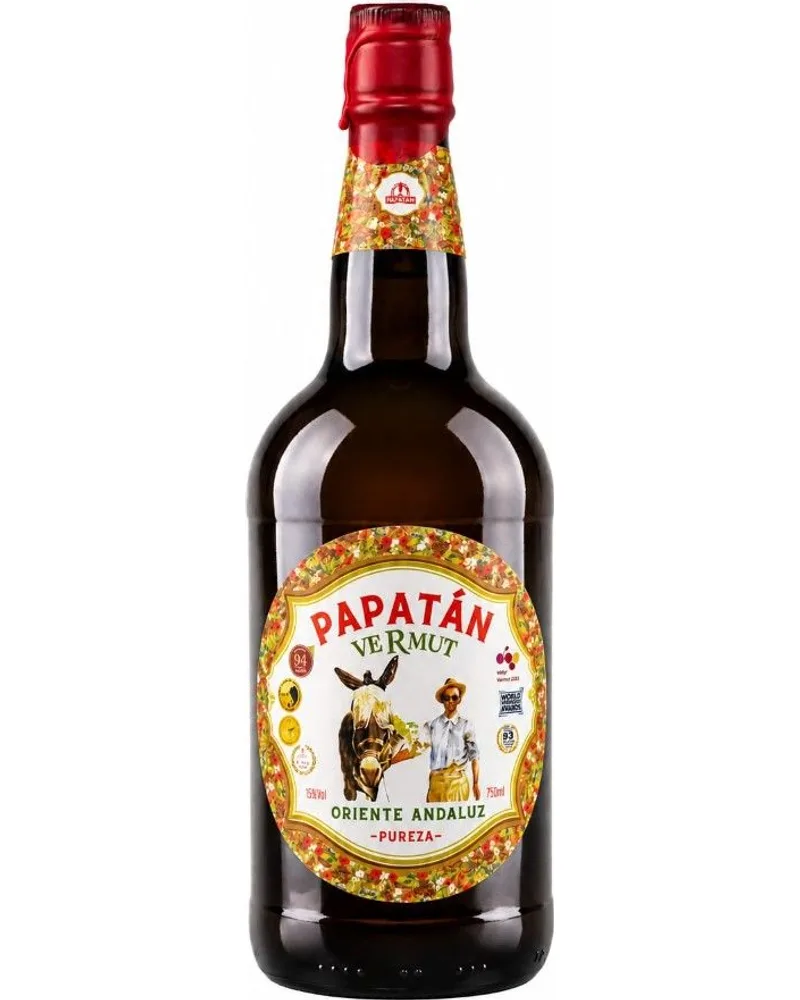
Torreperogil
Red · Artisan · Medium-sweet
Papatán
Vermut Papatán S.L.
Torreperogil, España
- Ageing
- Unaged
VP Score

El Escorial
Red · Artisan · Sweet
Vermut La Villa
La Tomata Origen
El Escorial, España
- Ageing
- Barrel-aged
VP Score
Piamonte
Red · Sweet
Martini Rosso
Martini & Rossi
Piamonte, Italia
- Ageing
- Unaged
Frequently asked questions
What makes a vermouth artisan?
An artisan vermouth is characterised by small-scale production, use of quality botanicals (often local or wild), prolonged maceration, own recipes and limitation of additives. In Vermutpedia we use the "artisan" field to mark these products.
Is industrial vermouth bad?
Not necessarily. Industrial brands offer consistency, accessible price and are optimised for cocktails and mass consumption. The difference lies in aromatic complexity and recipe personality.
How to know if a vermouth is artisan from the label?
Clues: limited production (batch, vintage), reference to specific botanicals, absence of unnecessary additives, clear origin of the cellar, and in Spain the mention "tap vermouth" when applicable.
What is the price difference between artisan and industrial?
Artisan vermouth usually costs between 12€ and 25€ per 75cl, while industrial ranges from 6€ to 12€. The difference reflects production scale, maceration time and botanical quality.
Is tap vermouth always artisan?
Traditionally yes, but today there are industrial tap vermouths. What defines artisan is the production method, not the sales format. In Vermutpedia we filter by the "artisan" field of the schema.